
How to develop a positive attitude towards math?
Someone asked me one time:
What are the incentives needed in order to develop a positive attitude in children and other students towards mathematics?
Now, I don't think special incentives is the main factor in developing a positive attitude towards mathematics.
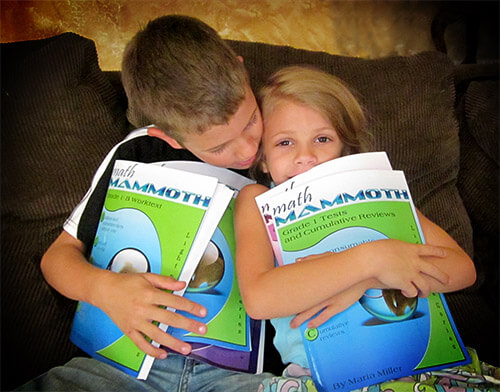
I feel it is sufficient to get a few of the basics right, to make it where students will like math just fine.
Disliking math is not something that is inherent in us or in our children. Little children don't dislike math or numbers. They're just fine with them! This "I hate math" or "I don't like math" attitude seems to develop during school years.
I also don't think that children dislike reasoning per say, because they're happy to do puzzles and play games where you have to think.
And, students' negative attitude towards math also is NOT due to (school) math being difficult. The math we learn in school is not that difficult. If you can learn to read and to use a computer, surely you can learn basic math. It's not that complex.
So... here are the two main factors that I feel contribute most to the attitude children develop towards math:
1) The teacher's attitude towards math.
Children are copy-cats. They watch us adults and learn from us — in a myriad of ways, and one of those definitely is that they absorb OUR ATTITUDES towards things.
If you love math and are enthusiastic about it, it is seen in the way you approach math in your life, and your attitude will be somewhat contagious.
This is true the other way around as well: if you don't like math, yet you teach it, students will sense your attitude.
2) The student's experiences with math and how it is being taught
The way math is taught can make a huge difference, because children easily start disliking math if they don't understand it and/or if they're made to feel dumb or put down in math class. (This is of course true of other school subjects as well.
I have had it happen numerous times over the years where a parent of a struggling student would write in, I would advise them as to how to fill in gaps and where to start, and aftewards, the child would enjoy math again. Understanding math is a big key to loving, or at least liking, math.
If your child or student doesn't enjoy math or hates math, you might check if they have GAPS. Mathematics builds upon previous concepts like a pyramid, and thus, students with gaps eventually encounter math topics they can't understand.
Another way a child can end up hating math is if they are not taught or don't grasp the actual concepts of math, but only try to get by, by memorizing things. For example, a very tight spiraling curriculum that does not allow students enough practice with new concepts can easily cause students to be in tears over math. But it can happen with any curriculum — typically if a child is placed into a wrong level.
Timed math drills turn many children into math-haters. Be careful with timed tests/drills, and if you notice negative emotions, such as of inadequacy or feeling stupid, discontinue using them. Some children like timed drills though!
One other point to keep in mind is, whenever a student makes a mistake, don't put that down. Mistakes are in fact something valuable, and we need to encourage our children NOT be afraid of mistakes. They are great discussion points, and are a part of the normal problem solving process. Most any time we encounter a problem or a challenge in our lives, we humans first make mistakes, learn from those, and then conquer the challenge.
Conclusion
The good news is, you can turn your child's negative attitude around! You can help them to succeed and to truly UNDERSTAND, and in most cases they will start liking math, or at least stop disliking it.
This has happened with many Math Mammoth users. I always instruct people to first check the placement tests and use the results to fill in any gaps, with the Blue Series books. These books are by topics and contain all the instruction + exercises necessary. At this link you can download one book from the Blue series for free.
See also
The value of mistakes in math learning
Should you use timed tests for math facts?
By Maria Miller
Receive my monthly collection of math tips & resources directly in your inbox — and get a FREE Math Mammoth book!

You can unsubscribe at any time.
Math Mammoth TourConfused about the different options? Take a virtual email tour around Math Mammoth! You'll receive: An initial email to download your GIFT of over 400 free worksheets and sample pages from my books. Six other "TOURSTOP" emails that explain the important things and commonly asked questions concerning Math Mammoth curriculum. (Find out the differences between all these different-colored series!)This way, you'll have time to digest the information over one or two weeks, plus an opportunity to ask me personally about the curriculum. A monthly collection of math teaching tips & Math Mammoth updates (unsubscribe any time) We respect your email privacy.
Note: You will FIRST get an email that asks you to confirm your email address. If you cannot find this confirmation email, please check your SPAM/JUNK folder. |
"Mini" Math Teaching CourseThis is a little "virtual" 2-week course, where you will receive emails on important topics on teaching math, including:
- How to help a student who is behind You will also receive: A GIFT of over 400 free worksheets and sample pages from my books right in the very beginning. A monthly collection of math teaching tips & Math Mammoth updates (unsubscribe any time)
We respect your email privacy.
Note: You will FIRST get an email that asks you to confirm your email address. If you cannot find this confirmation email, please check your SPAM/JUNK folder. |
Maria's Math TipsEnter your email to receive math teaching tips, resources, Math Mammoth news & sales, humor, and more! I tend to send out these tips about once monthly, near the beginning of the month, but occasionally you may hear from me twice per month (and sometimes less often). Peek at the previous tips here. You will also receive:
We respect your email privacy.
|
|