Math Mammoth Light Blue Series constitutes a full elementary mathematics curriculum for grades K-8.
Some of the main features of the curriculum are:
It is mastery-oriented and organized into chapters by topics. Thus, in each chapter the curriculum concentrates on one theme and its connecting topics (such as place value, multiplication, or geometry). Each grade level typically contains 8-10 chapters.
The curriculum focuses strongly on conceptual understanding.
Visual models and exercises are used a lot.
Mental math and number sense are emphasized.
The curriculum is nearly self-teaching for many children, since the full explanations of concepts are included in the student books. Thus it requires fairly little preparation time from the teacher.
For grades 1-7, there are free videos that are matched to the curriculum, plus quite a few for grade 8. (Grade 8 is a WIP.)
What is provided?
Each grade level consists of two student worktexts (A and B), which contain both the teaching (explanations) and all of the student work (exercises). For each level, you will also get a versatile worksheet maker (Internet access required). Levels 1-8 also include answer keys, chapter tests, and additional cumulative review worksheets.
files to replace the chapter on money in grades 1, 2, and 3 in Canadian, British, European, Australian, New Zealand, and South African currencies. The student worktexts use U.S. dollars as a default currency.
We also offer supplemental, additional skills review workbooks to accompany the Light Blue Series. (These are not included automatically.)
"I particularly liked the free math videos where you can actually see Maria explain each of the math concepts! There are a ton of videos for your kiddos to follow along with her as they do the problems. This allowed me to get more work done and enabled my son to work on his own. Win, Win!!"
Sharla at Minnesota Country Girl blog
The video below gives you a comprehensive overview of the curriculum:
More information
Please follow the links below to read a full description of each grade level, download samples, and find specific purchasing information.
In the link below, you can download a scope and sequence document for all of the grades (PDF file). Math Mammoth Scope and Sequence
We began homeschooling this year. Kids are 1st, 3rd, and 5th grades. I love Math Mammoth because it is challenging for them, but still uses clear small steps to teach new concepts. They can mostly do the work independently (not the 1st grader). If they are struggling with a concept that they haven t seen before in their previous education, I can go back to a previous Math Mammoth grade level (since I purchased levels 1-6) and pull that section for them to work through. They definitely struggled for the first few weeks with a different way of learning math (more challenging and more independent than public schools), but at around a month into the curriculum they are doing well and not needing as much help from me.
- Missy B., Co-op Member
Dear Mrs. Miller,
My daughter loves the new online practice site. Using mom's computer is always a fun treat, so she was thrilled to get to practice math facts on it. Please give our thanks to your son! My daughter says, “Thank you so much!”
We have loved Math Mammoth for the past 6 years. I've taught high school math since before I had children, using Foerster's and Jacobs' books in both private schools and homeschool co-ops. When parents with younger children ask what I recommend, I tell them about the great experiences my children have had and how well my oldest was prepared for Algebra. I've even recommended it for remediation for students I tutor who never grasped integers or percents.
Thank you for such a great program!
In Christ,
Jennifer Drury
Placement
It is fairly important that you have your student(s) take a placement test or several prior to introducing the student to Math Mammoth. Many popular math curricula are easier than Math Mammoth and thus there is a danger the child is placed too high, if you simply follow the "grade level" from the child's previous math curriculum.
If you'd like, you can send the placement test results to me, and I will personally review them and suggest a course of action.
I want to let you know how pleased I have been with the solid foundation your curriculum has given my daughter. Every time we had dabbled in something else, we always come back to Math Mammoth for the crystal clear explanations and the thorough, but never belabored, practice. I rave about it all the time!
Sincerely,
Alicia S.
Lesson Plans
We have developed a type of "lesson plans" for the online planner Homeschool Planet. These lesson plans pace the Math Mammoth curriculum, assigning certain pages to be done on each day, along with instructional videos and Internet resources (games, quizzes, animations) that match the lessons. The planner Homeschool Planet allows you some flexibility. For example, you choose how many days a week math is studied or on which date to start the lesson plan. You can also "push forward" all the remaining days in the plan if you miss a day.
I'm a professional accountant (CPA) with three children in Math Mammoth (Levels 5, 3, and 1). Two of them have a natural aptitude for math, while the other struggles with dyslexia. We chose Math Mammoth because it promised an affordable, easy-to-follow approach with very little preparation for parents. We've been very impressed with the results we're seeing with all of our children. We love that the curriculum is a complete grade school math program that's laid out over seven years instead of eight; it gives students who struggle with math the chance to go at their own pace without worrying about having to catch up later. The videos and bonus features are very helpful. Even though I play with numbers all day at work, I've learned a number of things myself while teaching my children using Math Mammoth. Maria's approach is the way I wished I had learned math when I was young. I'd encourage any homeschooling family to look into Math Mammoth.
James
Math without tears! We have tried so many different math options. Each one ended in tears for my 2 boys. At my wits' end, I decided to try just one more before admitting defeat. Math Mammoth had been highly suggested by several different homeschool moms that I know, so I gave it a go. My kids are thriving! This has been our saving grace. Thank you, Math Mammoth!!
B. Larson, Co-op Member
We have tried just about every math curriculum through the years but are back with Math Mammoth because we find it to be the most thorough and comprehensive. The customer service is wonderful and quick as well. Maria has always responded to any question or helped fix any issue I've had.
Jodi M
Other grade levels
Math Mammoth does not offer algebra 1 or above. It covers grades K-8. After MM7 or MM8, students can proceed directly to high school math (such as algebra 1).
Discounted bundles (digital version) are available for grades K-8, for grades K-4, and for grades 5-8.
*BONUS*: With the download version (grades K-7, or any of the bundles), you will also get Soft-Pak elementary math & language arts programs completely free!
I wanted to make mention that my children were recently given a standardized test to fulfill our state's homeschooling regulations. The score on their mathematical calculations were slightly above grade level, but their score on "mental" math was several grades above grade level. I attribute this entirely to your program: the thorough teaching and emphasis on "mental math" is well worth it. As a bonus, my children enjoy it (they much prefer your program to Math-U-See, which we used briefly). Before the test, I was a Math Mammoth devotee and suggested the program to most anyone who asked. How much more so now!
Regard,
Christine C
The old version
The ORIGINAL (old) version (for grades 1-6) before various major revisions and CCS alignment that I completed in 2012-2013 is also available:
I have used MM for nearly 10 years. My oldest daughter who is extremely math-averse, used it from levels 2-7 and has recently completed 3 years of high school math in 2 years because of the strong foundation MM built. This curriculum is economical, easy to implement, and most importantly, excellent quality. The best part for me, being very weak in math myself, is that the lessons are right there on the page so I can help my children when they need it just by looking over them. I have always recommended Math Mammoth to everyone who will listen and I truly believe it is the best homeschool decision I ever made.
Keri Flyte
Aug 2024
This curriculum is the dream for my special education students whose math
skills are well below grade level! It is working beautifully because it
allows me to give the assessment and immediately identify the areas of
weakness. I can then use the Kami application to split and merge so that I
can select and assign the appropriate worksheets to address the individual
areas that require improvement one skill at a time. I also love the way they
teach the skills--Best methods I have ever seen! I bought the entire program
for just under $200. One of the best investments of a lifetime! This would
be perfect for a homeschool teacher as well. They have workbooks if you
prefer the pencil and paper mode. There are a ton of videos that can be used
as well if you are not a math person. All in all, Math Mammoth is simply the
best alternative curriculum in my opinion!
- Doug S., Special Education Teacher
Thank you Maria,
I really appreciate your work, it helped my son fill all the gaps from his local school and we got right up to Gr 8 in no time. He gained confidence and now actually enjoys Math!
Yvonne
July 2023
Our school closed in March as a result of COVID-19. I decided to start homeschooling my two sons (2nd and 4th grade). This program is easy to follow and the repetition is the key. I started on page one of the workbooks for both grades and decided I would just work through the school year and make sure they knew all they need to know before next school year starts. My second grader is basically doing a review but I have noticed that he is reinforcing the fundamentals, learning mental math and not counting on his fingers. I quickly recognized that my 4th grader has some gaps in his math education. Based on the lessons I was doing with my 2nd grader I was able to pull the lessons he was missing and then circle back to the 4th grade lessons. I am confident that by the time school is back in session, the gaps will be filled and he will be on grade level. I really like that I received all the workbooks and extra material for grades 1-7. The school sent home the math workbooks the county is using and they are just not good. This curriculum has great explanations and MANY examples. I also like that there are periodic reviews that go back a few lessons to confirm the information has not been lost. When the kids do return to school I think I will continue to use this curriculum to make sure they don't fall behind.
- Tania Koles, Co-op Member
Hello, Maria and Math Mammoth staff,
I wanted to thank you for the curriculum you've created and the many supports you have available for using it.
We've bought some topical books and two different grade-level sets, we've used the e-books and the print books, we've really benefited from your online printable assessments, we've used the worksheet generator with the e-books we bought, and we've found your teaching videos very helpful for filling in a student's understanding of new lessons. It's curriculum-search time and a friend was asking about Math Mammoth... I realized that all the positive things I was telling my friend should go also to thank and encourage your team. (I also am thankful for the how-to-choose-an-algebra-program article - that was welcome guidance!)
Thank you for your complete and well-supported program. I'm glad there's something I can recommend so strongly to my friend.
Happy customer
This was a complete no-brainer. The cost for SIX full years of math was less than for one year of our old program. I knew that it would at least be useful as a supplement and I could cherry-pick the lessons we needed extra help with. But I think it will be best used as our full curriculum on its own. It's the perfect blend of creative problem-solving math, pictorial outside the box math, and the basic straightforward practice I was needing for the kids. We used Beast Academy but that was too much puzzle-based. My son is a quick math learner but not very fond of puzzles. He is so bright at math but he got discouraged and bogged down and there wasn't enough basic practice. We entered the spring with a bunch of gaps and forgotten skills. We were much more successful using Math Mammoth to fill in the gaps and now after only about six weeks using it, he's back on track with math and feeling more confident. I plan to use Beast Academy as a no-stress comic book once in a while instead. It's already paid off: my first grader developed a passionate desire to learn some multiplication so I printed up some of the 3rd grade stuff, and she was so happy and proud to do it. It was great to have it already. I m confident that we can now keep going at her pace, and maybe that will be faster than a typical first grader? I don't know, but I like knowing I won't have to buy a new curriculum if she goes too fast.
- Emily L, Co-op Member
May 2019
We love Math Mammoth Light Blue series! We are home schooling because our son's dyslexia is not well supported in the Iowa City, IA public schools. It took me months to find a good fit for our son's dyslexic strengths. Three of his five IQ levels are exceptionally high, and Math Mammoth plays to his Visual Spatial abilities while stripping away all the unnecessary language of some current common core math curriculum. Plus it's enough repetition to help cement math facts in the left brain of our right-brained kid. The way the pages are organized also help him stay on task and focused. The color worktext option helps provide visual engagement to a highly visual child. We also like the option of teaching with your videos. We haven't scratched the surface yet on all the alternate resources and practice pages you offer, because our math experience is going great so far. I wish I had been taught this way in the '70's and '80's!
Thank you!
Deb from Iowa City, IA
We love Math Mammoth! As a mom to 4 kids, I needed something that was open-and-go and didn't break the budget. I love how the lessons are broken down and the material is presented in such a simple and understandable way. There is plenty of practice for each topic so there isn't a need to supplement with other product. Much of the time, I actually cross out a few of the problems on each page when I see that my kids have a good understanding of it. We will continue using Math Mammoth for years to come!
A. Cartwright
December 2018
Math Mammoth has been transformational for our homeschooling! After struggling through 6 years with Math in Focus, it was time for us to try something new. My daughter has always been good at math, but she's never enjoyed it. Math Mammoth's format is less overwhelming, logical, and well-explained. Each concept is explained in such a conversational way that I feel like I'm learning how to teach math in a completely different way! I love that instead of being hit at the end of each chapter with a whole lesson of word problems, each lesson includes relevant word problems that enrich the lessons. And there are fun puzzles thrown in to keep it interesting. Most importantly, though, MY KIDS ARE UNDERSTANDING MATH BETTER THAN THEY EVER HAVE! I look forward to continuing with Math Mammoth, especially to starting my youngest strictly with it next year, and I've already told our homeschool coordinator about it so she can look into it more.
Jamie Gates
November 2018
My daughter has been struggling with math and is really loving math mammoth. We tried an online math program last year that I believed to be sufficient but after investigating further, it ended up falling short. There are many things that need to be written on paper and Math Mammoth fit the bill. The explanations and videos are very helpful! She loves doing math now!
Jami F., Co-op Member
October 2018
We love Math Mammoth! I switched my girls to MM from another program and we haven't looked back. Very thorough, well-explained and they love that they have control over their learning as it is basically self-teaching. I pull out the manipulatives when they want them.
- Jaime B, Co-op Member
September 2018
This is a super comprehensive curriculum. My daughter was way behind due to being "taught the test" in public school. This program has allowed her to speed thru 2 lower grades and strengthen her skills as well as fill knowledge gaps. Now, she will be caught up to her actual grade level by fall and I won't worry about her being behind her peers. The curriculum is easy to use, self teaching (with the option of guiding thru lessons), and, most of all, challenging, without frustration.
- Jan A.
June 2018
I'm a working mom who supplements math for my two children who are advanced in math. The Mammoth Math curriculum has been my go to for many years now. It s laid out in a very easy to understand format with great examples to help teach new concepts. My children are definitely doing well in math and I know a great deal of that is from the Mammoth math which we do at home. I like that I can purchase single topics to help further mastery or certain topics. It's also very affordable which I really love. Awesome product!
- Teial S, Co-op Member
May 2018
Dear Maria,
I began homeschooling my four children this year. They are in grades 7, 5, 4, and 2. Your curriculum has been such a great help! Because I knew they would likely have learning gaps I purchased all your resources on one CD.
As the school year is coming to a close I see great improvements and they feel empowered that they can now understand many math concepts which they did not know previously. Thank you so much for developing this curriculum! It is has been a great blessing and resource for us!
Kyla
Also, thank you for your great customer service! When the CD arrived a bit late you sent us downloadable stuff so we could get started on time!
This is my second year using Math Mammoth. By the end of this year my kids will have completed grades 1-4. MM is comprehensive in scope, very thorough in explanation to the student, and gives lots of opportunities to use manipulatives or online games etc to reinforce concepts. The pages aren't fancy, but they are in color and word problems are relevant to modern life, which may not seem like a big deal but it keeps the curriculum from feeling as tedious as others. My older son has been able to "open and go" with most topics in the curriculum, but my younger son is just now reading fluently, so almost every section has to be read aloud to him and explained. That said, he's six and doing 2nd grade math because he was well prepared for math concepts in the K4 preschool he attended so we dove right into 1st grade math when he stared kindergarten with very few problems.
I appreciate that the curriculum teaches my kids to look at problems differently than I was taught. I am expecting a very smooth transition to algebra when we get there.
I highly recommend giving MM a look! It was an amazingly worthwhile investment!"
- Laura C, Co-op Member
September 2017
I taught both elementary and high school before becoming a homeschooling mom and I was seriously impressed when I first started looking into this program. I liked how straightforward it is and the logical progression of the lessons. But because I'm not a math teacher, I asked my math teacher brother for a second opinion. I showed him some free samples and he said, "This is good, get the program!" So we got it and we have been very pleased. My kids have used it now for 2 years and they love it. We especially like the mental math exercises and the specific teaching of mental math strategies. I am a little embarrassed to admit that my mental math skills have improved!
This program is set up to teach math concepts in a logical, methodical way. All math builds on previous concepts so resist the urge to race ahead. Make sure you get that firm foundation... but if you do later find there are gaps in your child's understanding, the Blue Series materials are organized by topic, rather than grade level and are really great for focusing on a particular topic (i.e. fractions.
There are great suggestions for math games and further resources. Included in each booklet.
The icing on the cake is that Maria Miller actually answers her email so if you have questions, ask. She has been remarkably helpful.
- Anne, Co-op Member
August 2017
I love Math Mammoth! It has made it so much easier for my grandson to learn math. I love how she shows more than one way to learn concepts! My grandson learns his math much more easily now due to Maria's program! I have tried other programs but this is the one we will stay with! It took me a while to find her, but I have purchased levels 1-7 so I will have them ready for my grandson!"
Kathleen
June 2017
I like how each concept in broken into separate "chapters" so it's easy to take that concept and do other hands on learning instead of the worksheet if we wanted to! It just makes it straight forward and easy to follow!
- Danielle I, Co-op Member
May 2017
My daughter went through your program in 4th, 5th and 6th grade. She's finishing up 8th grade now in Geometry and is highly confident math student ready for High School in a large part because of the foundation she got with your books. Thank you again. I tell every one I know stuck in our EDM program that there is a better way. The tutorial style almost any parent can use and eventually the child themselves is brilliant.
Once my artsy daughter realized you can use colored pencils too she started to enjoy our math time everyday. Thank you.
Ken Foster - Brighton Michigan
April 2017
My boys are enjoying Math Mammoth. We were using another math program last year, so before we started, I gave them the end of the year test over a period of several days. I have used the results to target areas of weakness and reduce work required in areas of strength.
Since I purchased the entire series, we can move on to the next level, or review lower level topics as needed. Each child can have a math experience tailored to his learning level without a lot of prep on my part; I just print out the pages we need, a few days in advance.
I especially like the mental math practice and algebraic thinking puzzles. I can already see more fluency in using numbers after only a few weeks.
Thank you for offering this program!
Sue B.
October 2016
I purchased Math Mammoth grades 2-4. I decided to buy it because the math curriculum I had been using with my daughter had worked well with my sons, but was not a good match for her. I decided to make the change mid-year but we live overseas so purchasing a curriculum with physical textbooks and having them sent to us would have been expensive. The fact that Math Mammoth was an instant download was a huge plus for us. I could start using it immediately and it was very reasonably priced.
The curriculum is very thorough with lots of practice problems and lots of variety within the problems. The layout is simple, but also colorful and my daughter likes it when puzzle-type problems are included in each section. I also think it has a good amount of word problems included.
This is the first math curriculum that my daughter has responded to positively and we have been making steady progress.
Thank you, Math Mammoth!
Renee G
October 2016
We absolutely love this curriculum. The working-text is easy to navigate. The content is truly written to the child, so it requires little effort on my end, as the teacher, to get our math lesson done. My daughter did not enjoy anything about math, but she is able to comprehend her assignments. It progressively increases in skill level, so you have the opportunity to master difficult concepts before moving forward. There are also review questions that serve as a refresher for previous content. All around, I couldn't imagine using anything other than Math Mammoth.
- Amber R.
August 2016
We've tried several different math programs in the past. None of them ever seemed to work for all of our kids. Some of our kids deal with issues like Asperger's and Dyscalculia, so we're always on the lookout for ways to help them.
Before purchasing Math Mammoth, we contacted the company to ask questions. Maria, the author of the program, responded immediately and answered all of our questions in detail. She then offered to help place our kids within the program.
We had our children take the placement tests and then sent the results to Maria. She went over each test, section by section, and told us what we should do to get our kids started in the program.
We decided to try out the program. We have been very happy with it, and our kids, who previously disliked math, now no longer complain.
They love sitting down with their math lessons and working through the problems. Honestly, there was some complaining at first, especially with the somewhat difficult Puzzle Corner problems, but within a week they were enjoying it.
Math Mammoth forces your kids to think differently about math. This is what caused our children to complain at first. It felt too difficult for them to think this way. But now that they have made the adjustment, it's great to see how they approach math and the way they think mathematically now.
We are very pleased with Math Mammoth and would recommend it to anyone looking for a great math program.
E. Erickson
April 2016
I am very satisfied with Math Mammoth. I bought the full package at a very much discounted price thanks to the co-op, and now I can choose what to reinforce for my 9 year old child. The texts, exercises and example are so clear that my child, who does not read english (we are Italians), can work by himself on most of the topics. This has also helped his self-confidence. I like that I can chose from books by grade, or from topics that I want to reinforce. Exercises go from simple to hard very gradually, which also helps my child. With his school book, that was a spiral program, he was very confused, but now we can focus on each topic for as much time as he need. He is no more afraid of math! and sorry for the english, it is not my mother tongue :)
Yona B.
March 2016
We are loving Math Mammoth! It's great because the lessons aren't super long so the kids don't get frustrated. It's perfect because it goes all the way through 7th grade so both of my kids can use the program. Finally, it is priced very reasonably for all that is included!
Samantha J
December 2015
We purchased Math Mammoth after using a different "mental math" program for the previous 2 years. While I LOVED the previous program, it was VERY teacher-intensive. That was okay when I had 3 boys age 5 and older, but when I had a baby I was struggling to get lessons in with the other program. After talking to some other moms & reading reviews, I decided to give Math Mammoth a try. It has the "mental math" component that I love, but it is more independent (for children who can read). I am available to answer questions when needed but I no longer need to teach entire lessons (3 at that). My children can each be at their own unique levels and just ask for help as needed. It has really been a blessing. I am extremely picky about the materials that I use and I find this program put together very well. I thought I wouldn't like that it is a computer file and I have to print, but that hasn't been a problem. In fact, if a child ruins or loses a page, or completely doesn't understand a page, it is super easy to toss that page in the trash and just start again fresh. This has been a great fit for our homeschool!
- Angela D., Co-op Member
November 2015
Math Mammoth has many examples to work through and the students learn as they go. Although the program does not supply manipulatives, it does encourage use of household items to provide kinesthetic learning. It is very organized, structured, and easy to follow. I especially appreciate the reviews provided before each test.
Amanda Bermudez
May 2015
After trying many different math programs Math Mammoth is a life saver. I have 3 of my children using it and we all couldn't be happier. They are fully understanding concepts that they had trouble with before because of the clear descriptions in Math Mammoth.
Vasuki
March 2015
I am very happy with this purchase. I love the amount of resources my disc offers. The worksheets are excellent, tests are comprehensive of the material covered within a chapter, and there are many supplemental resources to help build on the skills being learned. Another bonus is all the information is there for each grade level. I have one child working at grade level and another who is a year ahead. The program is a win-win for our family.
- J. Chavez
January 2015
As my oldest was getting ready for pre-algebra from our previous math program (TT), I felt she wasn't ready. After using MM test, I realized how big her gaps were and ended up with the whole program. I wish we had been doing this for years! It is easy to use and very complete. I know this will bring her and her little bro back on track. The cost of this program is low compared to most others and that it is easily used for more than one child is even better. I've used many math programs over the last 20 yrs with my 4 kids, and I wish that I had got this one first!
The pages are clear, simple and easy to understand. Minimal colors are used to avoid distractions for some kids. The program is clearly laid out for both using year by year or if you need to go back and do remedial work. It has simplified my life by helping me pinpoint what areas my kids needed to work on and directing exactly to where I needed to go to get them that work. Love it and highly recommend it!
- Valerie B., Co-op Member
November 2014
Hi Maria,
I purchased your math curriculum 3 years ago. Let me say, "Thank you!" I have really enjoyed using your materials and my daughters are doing so well. I love the way the material allows them to work independently and to think mathematically. Their standardized test scores consistently put them in the top percent. This curriculum has been a great tool for our homeschooling, and I am so thankful for it. My oldest daughter is entering 4th grade but will be working through grade 5 math (the beauty of home schooling allowing us to work at the level they are ready for!). I've already started wondering what I'll do when she completes the grade 6 curriculum but just saw on your website that you're working on materials for grade 7. Excellent!
Thanks again for all your hard work in creating excellent math curriculum!
Carolynn Christenson
July 2014
Hi, Maria
I just want to send you a note that I absolutely love your curriculum! I think it's the best available. It's rigorous, yet the lessons start very basic and are colorful and engaging. I also love how many different ways you explain and have the student practice a concept. I'm waiting with baited breath for your seventh grade curriculum!
Sincerely,
Jenny Marshburn
July 2014
Maria,
I would like to thank you for Math Mammoth. Your curriculum has done wonders for my daughter who struggled with math. We took 6 months off from math in the second grade because she would be in tears every time we worked on math. She was frustrated and so was I because I could not figure out how to explain concepts to my child and I discovered that she really had little understanding of the math we had already covered up to that point. I searched for a more suitable curriculum and tried out two other curricula before hearing of Math Mammoth on a homeschool forum I participate in. I decided to give it a try since your sale made it so affordable. I am so glad I did! My daughter worked hard and did two and a half or three workbooks of the Light Blue curriculum per year for a few years. Her hard work has paid off. She has gone from being a grade behind when she started using your curriculum in second grade to now being ready for pre-algebra or quite possibly even algebra, at the end of seventh grade. I don't know how often you get emails like this, but I had to let you know what a difference you have made for my daughter. She understands math now! It may never be her favorite subject, but at least now, after finishing Math Mammoth, she has confidence in her math abilities.
Jennifer Jernigan
June 2014
My son switched to Math Mammoth this year from Teaching Textbooks. He had completed Teaching Textbooks 6, but we had to start back with Math Mammoth 5 when we switched. That tells you how far behind TT is. My son loved TT, but even a non-math person like me could see that TT was not giving him any practice in mathematical reasoning. He was getting A's on every lesson and test, but if I gave him a problem that was worded differently, or one that required him to do something even slightly complex with the information he had learned - he was stumped. It took him a few weeks to adjust to the much more rigorous work in MM, but after finishing the first half of level 5, he is doing very well - often understanding concepts and figuring out problems way before I do. And I am learning a lot too - grade 5 is just about where I got lost in math and I never got found. I wish I had had Math Mammoth!
Thanks Maria
Connie and Sam Downer
January 2014
I would like to say thank you to you for the wonderful curriculum you have designed. I appreciate all the work you have put into it. My daughter started off math with another program (and she absolutely hated math). We were using some of your sheets as supplements, and both felt that your program was superior to the one we started with. I love your creativity and how you approach concepts from a number of different angles. The color sheets, as expensive as they are to print, have helped my daughter as well. Now, while math is still not her favorite subject, and probably never will be, we have far fewer complaints about the topic -- she has even had moments where she said she loves math. All in all, she is happier, and I feel that she is learning so much more. Thank you!
Nancy
January 2014
Thanks so much for your math curriculum - there are so many beautiful things in the way that you've structured your work. It does so many things that I always wished a curriculum did. I also appreciate that you use basic math terms that are common to the discipline; this helps tremendously helping kids prepare for our state assessment. Because all of the instructions are with the worktexts, my children's parents know how to help and support at home - that's so appreciated because it builds the home-school partnership. I want math to be accessible to both my parents and their children, and your work helps to facilitate that process of working together to learn math. Thanks for your thoughtful and thorough work - I know it's making a positive difference for my students!
Jana Fullerton
January 2014
Love this program! The details of how to find the mathematical answers are clear, the pages are uncluttered, and their customer service is not only very friendly but quick too. What else do you need from an educational tool?!
- Mimi, Co-op Member
December 2013
II want to tell you that we love Math Mammoth! Thank you for creating such a smart curriculum. I've tried several. This is especially great for a mom who also has to work or has several kids. It has been a great success for my 13 year old son. He has been in our family only 1 year, adopted from China at age 12. He is very behind in everything, but LOVES Math Mammoth and is being very successful. My daughter, who is in her appropriate grade, also enjoys it. I am telling my friends about it, trust me!!! It starts a kid out right, working independently at their own pace with a teacher being more of a tutor. This is so much better than them being spoon-fed a script. I also like that it doesn't have a lot of different pieces. Sometimes I bring out a manipulative to help a child with a concept, but I'm thankful I'm not spending a lot of time cutting out little paper clocks, triangles, etc. How I WISH I had it when my other 13 year old was starting out. I started her in Abeka in which she was successful but I despised. Then we moved to Saxon which I loved and SHE despised! Then we moved to Right $tart Math, and, oh my, do not get me started!! We finally pitched that and in grade 9 she's chosen to use Saxon and is happy with it. Sadly, because of all the changes and experimenting, she is behind, though she is very bright. Oh well.....
Nancy B. Mooney
October 2013
I purchased Math Mammoth for my 3rd grade daughter and used in conjunction with her math studies at school; great improvement in her math due to her completion of all of the Math Mammoth exercises. I am ordering the 4th grade series. Wonderful series!
Juliet
September 2013
Dear Maria,
I wanted to thank you both for developing the Math Mammoth resources and for your helpful blog entries. I subscribe to your blog and in March purchased the full set of Light Blue series resources through Kagi. My children, ages 6 and 7, find your workbooks to be challenging, fun, and engaging. My 7 year old especially enjoys the Puzzle Corners.
We also use the included internet resources and suggested games on a weekly basis. My kids now look forward to math time. It is obvious that you have a passion for math and for children. Thank you for investing the time to develop such high quality materials and for your continued effort to share your passion for math with parents and children through your blog.
Sincerely,
Lori Johnson
Dallas, TX
June 2013
Hi, just sending you a note to say how much we are enjoying Math Mammoth. I started homeschooling this year, with Math U See, and have switched mid year to your program and thank goodness I did. The kids - 2 of them - are doing really well with your program. Unfortunately I had to put my grade 2 daughter back to the grade 1 level, but she is breezing through what she knows and just filling in gaps, so it's no trouble at all.
Thanks again for such a gentle, natural math program!
Laura
Ontario, Canada
May 2013
I'm a homeschooler & my two kids have been in public school until March of this year. I have tested them and my 1st grader made a 37 while my 2nd grader made a 57. Public school had my kids as straight A students and had told me that both had test out for the year so no worries on them moving up!! I am having them repeat 1st & 2nd grade math obviously & I gave them the option of what they wanted to learn first.
My 1st grader picked double digit math so we started learning place value today. He absolutely loved the virtual abacus!! We also had an ah ha moment. He now understands what the tens place is & what it represents. It is so nice to see that lightbulb go off!! As for my daughter, well she picked geometry & fractions and completely lived today's lesson & got very excited when she saw her A+ in the geometry picture once colored. Excellent added bonus for her. Just joined a local group & will be discussing your stuff for sure!! Thanks so much. Great product.
Channa
April 2013
Dear Maria,
I wanted to tell you what a wonderful success MM has been for us. I have now used it with our 3 youngest children. The older 2 started with Horizons. I purchased Math Mammoth to use just with our youngest, who is now 7, but when I saw how much it made sense, I had the other 2 switch to it as well. My 10-year-old is now working on long division, and something about how you explain it made it so much easier than Horizons ever was for the oldest 3 children, which I still consider pretty good. For my 7-year-old, he just gets it so very well. Your explanations are wonderful, and he can already add and subtract large numbers in his head, which is awesome. Thanks so much!
Best regards,
Carla Hanson
www.CatholicHomeschool.com
P.S. I have recommended MM on my blog and will be doing so again soon.
April 2013
I'm usually a quiet user of curriculum which means I rarely let publishers know my likes and dislikes. Also, I'm a curriculum junky! Between my three children I have used so many different math curriculums that I've lost track. I'm saying all of this to tell you .... I LOVE MAMMOTH MATH! As a prior elementary teacher and now a homeschool mom for 7 years, even I am learning new ways to look at math and problem solving. I am so thankful I accidentally found Mammoth Math. Thank you!
Kristi Canfield
March 2013
Hi Maria,
I just wanted to let you know that I homeschooled my son for math for the first time using strictly your curriculum with only a supplemental practice in a few places. On the NWEA he scored at the 98th percentile for 6th grade (he is in 4th grade)! Thank you for your approach and focus on problem solving and skill mastery! I will not use anything else.
Becky Gersich
March 2013
Dear Maria,
We tried the samples with our oldest (of three children) and liked them so much that we purchased the grades 1-3 bundle on Currclick.
It's hard to know where to begin with thanking you. Your website, blog, and videos are rich resources. The samples alone would have been a great help. The seven-day tour is a great idea. I'm really impressed with all that you offer to parents and teachers.
I love the format. No more juggling a bulky Teacher Manual or making copies or complicated planning. My oldest is only six, so I sit with her, but the format of Math Mammoth really eases the organization and planning. She enjoys being able to read the lesson and do as much as she can with me close by to help.
You have given us a wonderful resource. Thank you again.
Sincerely,
Sarah
December 2012
I have tried a couple of the blue series worktexts and my children and I loved them. We have struggled to find a good math curriculum that suits our learning styles, teaching styles, and budget and I feel like after sampling several math mammoth worksheets and worktexts, it is the perfect fit for our family. Thank you Maria for answering all of my questions when I emailed you and for writing such a parent and kid friendly curriculum that is aligned with common core standards!
Shanna
November 2012
Just want to thank you for Math Mammoth! Very affordable. I have thrown everything else out and this is all we are using. My math-hating daughter who just finished third grade is doing the multiplication from the blue series to prepare for 4th grade next year. She is doing this on her own over the summer because she likes it! Never thought I'd see that. She has really struggled with multiplication and she says this is making it so much easier for her to understand. I love the ability to use the blue series to fill in the gaps of what they don't "get" the first time around. This is so customizable for different kids. I love the pdf format also. I can put the book together in any order I want. I love the no teacher's manual thing. With three kids it is hard to shuffle around 3 books. This is so much better because when each kid has questions they already have it all with them when they bring it to me. I was so excited to find this. Wish
I had found it a couple of years ago! Thank you for this curriculum and thank you for making it affordable. I bought all 6 levels at once. I could never afford to do that with any other curriculum. This has ended the struggle (for the most part) with my daughter. Thank you for making teaching my kids math affordable, easy, and even enjoyable!
Sara
July 2012
Hi, Maria! I just wanted to thank you for your math curriculum! My 7 year old son was struggling with math using a different, rather more expensive curriculum, so I took a crazy chance on Math Mammoth after remembering your blogging about it. Just a few weeks into the second grade books, and he's having no trouble at all! He doesn't cry during math anymore. I am so very relieved that I just had to tell you. Thank you for your no-nonsense, easy-to-understand approach to math.
Sincerely,
Cindy Dyer
October 2011
Hi Maria...I just recently purchased Math Mammoth for my 3 children... here are the things I've been hearing in my house for the first time:
"Mommy, this is fun!"
"Mommy, can we do math first today?"
I'm enjoying teaching the math...and the girls are already feeling more independent (the two who are reading well, anyway)...sometimes needing a bit of clarification. I think they're carrying themselves a bit more confidently these days as well.
Thank you!
Tracy Emery
February 2011
I LOVE this curriculum. I have 7 children and you make it affordable to homeschool... they can do their math pretty independently... and best of all... my kids all "get it"! Thanks! I am even learning how to do my fractions!
Ruth
November 2010
Dear Maria,
I pulled my 2 daughters out of public school to teach them at home. Now, this was a very difficult decision for me as it is for a lot of parents. I am not always confident that I am teaching them as well as a school teacher would. I also work full time and teach them by myself as a single parent.
Finding a thorough math curriculum was at the top of my priority list. I needed something that I could easily explain and that they would quickly learn. Math Mammoth has been the perfect Math source. It has given my youngest daughter the confidence in learning that she was not getting in public school. After getting used to the instructions given in the books, she practically teaches herself with the Light Blue series. I come home from work, check her lessons for the day, and usually find that she has completed them on her own with very few errors, if any at all! It has made our afternoon/evenings much more enjoyable.
In using the Math Mammoth books, I have become more confident that my daughters will succeed in all areas of Math.
Thank you,
Darlene Brown
November 2010
Maria, I have your complete set... I can't tell you how much I've enjoyed using your math lessons in my special ed
classes... You have done a terrific job, my students love as do I... I encourage everyone to at least try the sample
and I promise you will want to purchase it... Thank you for everything!
Sheila Brown
Ganado ISD
October 2010
My children are learning SO much from your teaching style. I LOVE the way you teach different ways to look at the problems, so that it is not rote, but conveys more the intricacies of playing with numbers. I backtracked when starting with Math Mammoth to make sure our two boys had a strong foundation, and I'm glad I did. (4th grader doing 3rd grade worktext, 2nd grader doing 1st grade worktext)
Again, I thank you for this wonderful resource!
Angela Maddox
October 2010
I am a Canadian homeschooling mum of four living in Switzerland. My
school age children are 11, 9 and 6. My preschooler is 2 1/2.
I absolutely adore the complete curriculum series. I am currently
using grades 1 and 4. My six year old flies through the pages asking
if he can do just one more most days. I suspect that he will be on
the grade 2 books by Easter at this rate. Prior the starting the
grade one curriculum, he attended a Montessori school. His passion
for numbers may be inborn for but this was not the case for his older
brother or sister and they enjoy the work as well!
Last year I decided to homeschool our 10 year old son. He is bright
outgoing and articulate but he had lost his spark for learning. As
there was no complete curriculum available for 5th grade I used the
fourth grade one and supplemented with the green and golden materials
for 5th grade. Within a few weeks, he stopped groaning about math
and began to genuinely look forward to the work. Words cannot
express how pleased I am that he has found a love of numbers again.
I found it very, VERY challenging to choose a program for him this
year but settled on YourTeacher.com pre-algebra which I supplement
with gold and green grade 6 materials.
Our 9 year old daughter has never found math easy or interesting but
I hope to see that change as we embarked on a homeschooling journey
with her this year as well. She is diligently working her way
through the complete curriculum for fourth grade and when she finds
that too daunting, I print something from the third grade books to
refresh her memory. I don't expect her to look forward to her daily
math lesson BUT she no loknger dreads it and we are only 7 weeks into
the year.
My communications with you have far exceeded my expectations. You
answered my emails promptly when I was begging for a 5th grade
curriculum in February 2008 and I am so pleased to see that it is now
available. Well done!
There was a time when I lost all of my data because of a hard-drive
malfunction and this meant that I no longer had access to the Math
Mammoth materials. I was about to re-order when I thought that it
might be worth asking if it might be possible to have them re-sent.
They were in my inbox within hours.
We also own the clock and multiplication book which are being used by
our 6 and nine year olds respectively. They are thorough and
progress in a slow and steady manner that makes learning these tricky
concepts easy.
I always look forward to reading your latest articles about teaching
math. I do not have a true passion for numbers myself but I am
thankful for the math teachers in my life who did. It is thanks to
them that I never struggled with the concepts. From your articles,
it is clear that you are one of those teachers and I am grateful to
have stumbled upon your website.
Thank you so much for all that you do to instill a love of math in
children!
Receive my monthly collection of math tips & resources directly in your inbox — and get a FREE Math Mammoth book!
We respect your email privacy. You can unsubscribe at any time.
Math Mammoth Tour
Confused about the different options? Take a virtual email tour around Math Mammoth! You'll receive:
An initial email to download your GIFT of over 400 free worksheets and sample pages from my books.Six other "TOURSTOP" emails that explain the important things and commonly asked questions concerning Math Mammoth curriculum. (Find out the differences between all these different-colored series!)
This way, you'll have time to digest the information over one or two weeks, plus an opportunity to ask me personally about the curriculum.A monthly collection of math teaching tips & Math Mammoth updates (unsubscribe any time)
Note: You will FIRST get an email that asks you to confirm your email address.
If you cannot find this confirmation email, please check your SPAM/JUNK folder.
"Mini" Math Teaching Course
This is a little "virtual" 2-week course, where you will receive emails on important topics on teaching math, including:
- How to help a student who is behind
- Troubles with word problems
- Teaching multiplication tables
- Why fractions are so difficult
- The value of mistakes
- Should you use timed tests
- And more!
You will also receive:
A GIFT of over 400 free worksheets and sample pages from my books right in the very beginning. A monthly collection of math teaching tips & Math Mammoth updates (unsubscribe any time)
Note: You will FIRST get an email that asks you to confirm your email address.
If you cannot find this confirmation email, please check your SPAM/JUNK folder.
Maria's Math Tips
Enter your email to receive math teaching tips, resources, Math Mammoth news & sales, humor, and more! I tend to send out these tips about once monthly, near the beginning of the month, but occasionally you may hear from me twice per month (and sometimes less often).



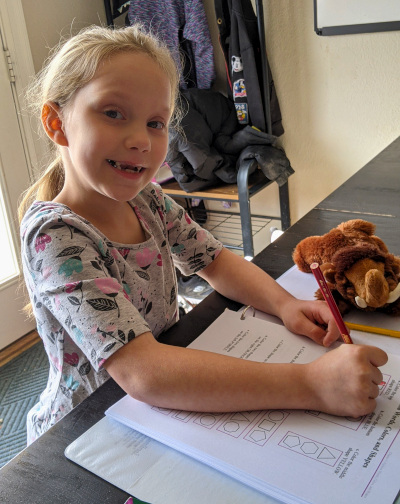

 My daughter loves the new online practice site. Using mom's computer is always a fun treat, so she was thrilled to get to practice math facts on it. Please give our thanks to your son! My daughter says, “Thank you so much!”


 A monthly collection of math teaching tips & Math Mammoth updates (unsubscribe any time)