
Welcome to the May newsletter! |
1. Math Mammoth news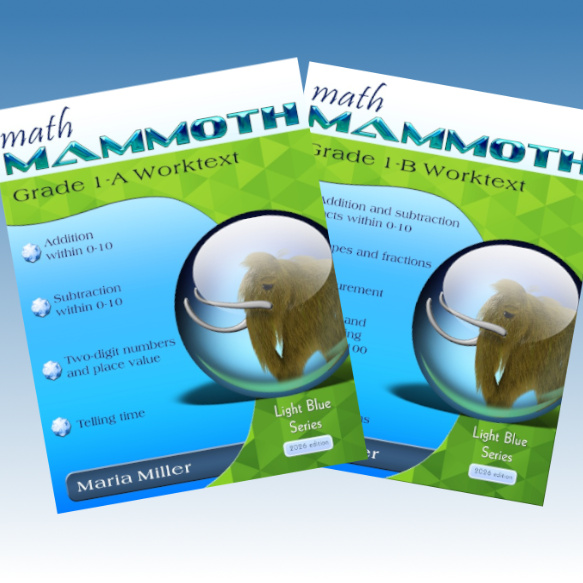 Changes in this new edition: The 1-A worktext is quite similar to the old edition in the core content, but the chapter on time was moved to it. The biggest changes are in the 1-B worktext, in the geometry chapter and in the chapter about adding two-digit numbers.
See samples: TOC and sample lessons for 1-A TOC and sample lessons for 1-B Those who have purchased a digital BUNDLE in the past can get a download link that includes the new edition here (for customers who purchased at MathMammoth.com or at Homeschool Buyers Club). If you purchased the grade 1 digital version as as separate item, please contact us for the updated file. If you purchased at TPT, you can simply log in to your account and redownload the product. The traditional May sale is here! From now through June 1, 2026. Use coupon code MAMMOTH26 to get 26% off of your purchase of digital downloads at the MathMammoth.com website. Here are some quick links to get you started:
|
2. Math Talks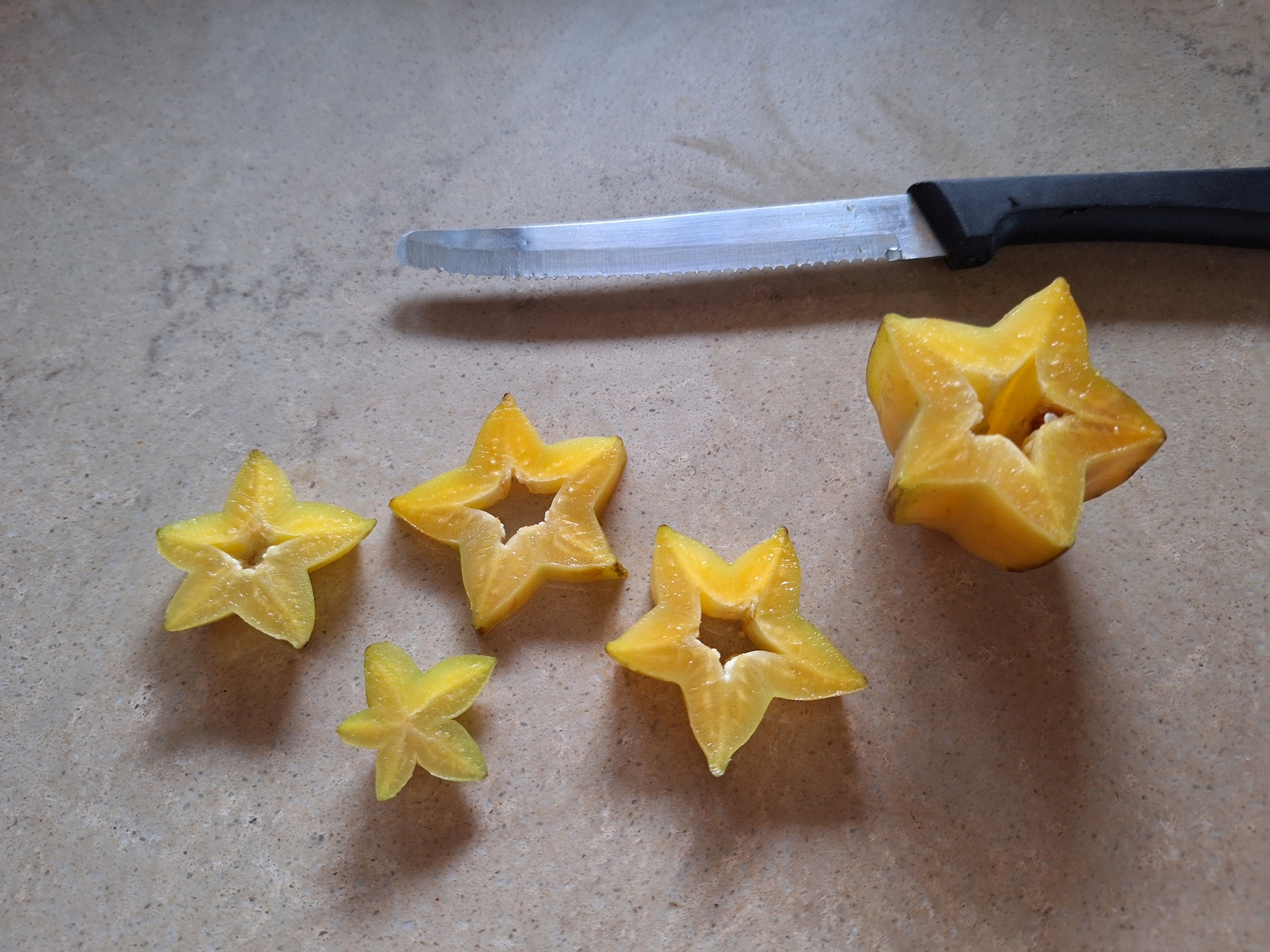 The idea is to let the children first observe the image carefully, and hopefully notice something that ties in with math or numbers. You can ask, "What do you notice?" In each image, there is something mathematical to notice, and usually many things. Another common question to ask is, "What do you wonder?" Curiosity is important! It is a basic trait of mathematicians, because their work involves exploring and finding new ways to explore the frontiers of mathematical knowledge. And we can all, in a sense, be "mathematicians" when we are curious and wonder about things in our world that connect with math. For many images, you can ask the child to make a math story about it. This means a story that includes number(s) and/or math operations, not just (for example) a story about where the chickens are going or what they have been doing. Check it out! |
3. FlashcardsOne of my followers sent a note that they made a free flash-card web app...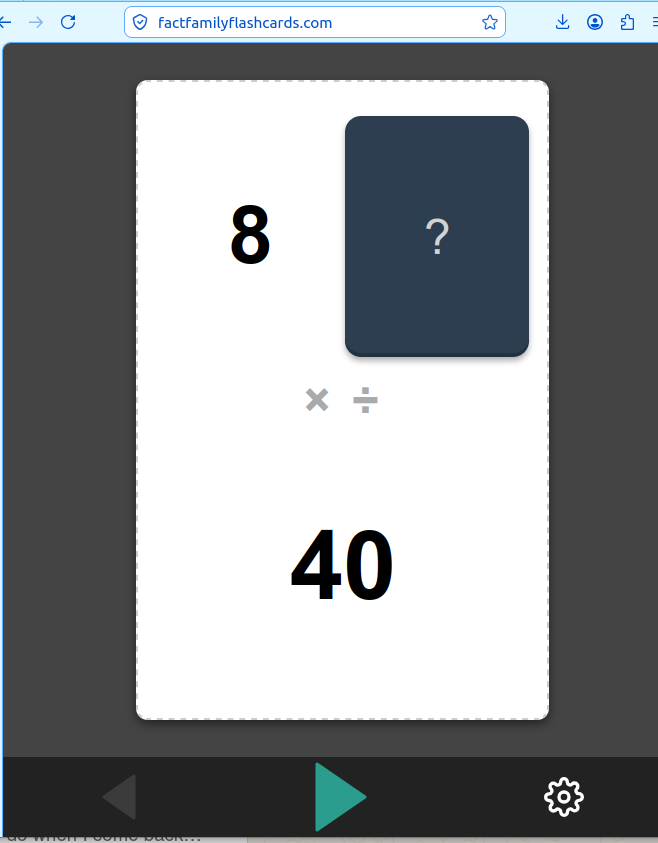 QUOTEEnjoy! The app has the option for addition & subtraction and/or multiplication & division fact families, and you can choose which numbers it uses. Fact Family Flashcards.com On the usage of flash cards in general, see this article of mine: When to use flashcards. Not all children benefit from them. |
4. Summer mathIt's almost summer here in the Northern hemisphere. Many consider doing some summer math to help kids not forget what they've learned, and/or to prepare them for the next school year — or simply to keep them busy.On this page are seven wonderful ideas & lists of resources for your child's summer math time.  DO NOTHING Perhaps your child doesn't need to study math during the summer and it's simply time to take a break and enjoy the summer! I also wanted to highlight our Math Mammoth Review Workbooks (grades 1-8). 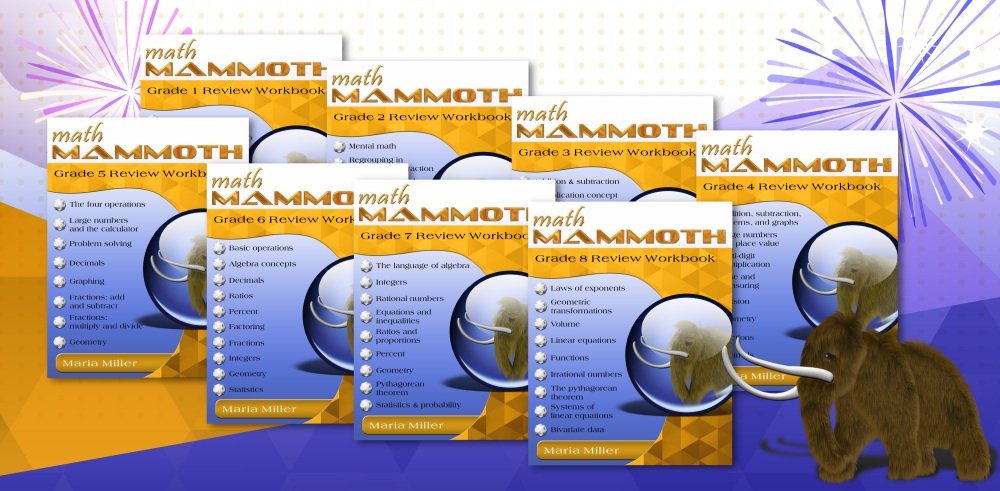 Each one provides a comprehensive review of one grade level of math, and are available both as downloads and as printed books. These review workbooks are especially useful to prepare for the next grade level in Math Mammoth, if your child or student has not previously used Math Mammoth. (For those who have used MM, the review workbooks don't bring any new content. If that is your situation, consider the Skills Review Workbooks instead.) |
5. Just for fun!
Thanks for reading! 🙂 Feel free to forward this issue to a friend/colleague! Subscribe here. Till next time, Maria Miller |
| Complete curriculum | Math games and interactive practice | Math Mammoth freebies | New to MM? Start here |
| Privacy & your personal data | Spiritual Atoms - Tiny but Essential | Blue Series: For filling in gaps |