|
Hello again! Some of you may have thought that I skipped the April newsletter. Well, I did, until now... here are my "excuses". First, I spent one week in April traveling... to Toronto. We saw the fabulous Niagara Falls of course, and several places in Toronto, such as the St. Lawrence Market and the main museum. In keeping with a "mammoth" theme, my daughter took this shot: 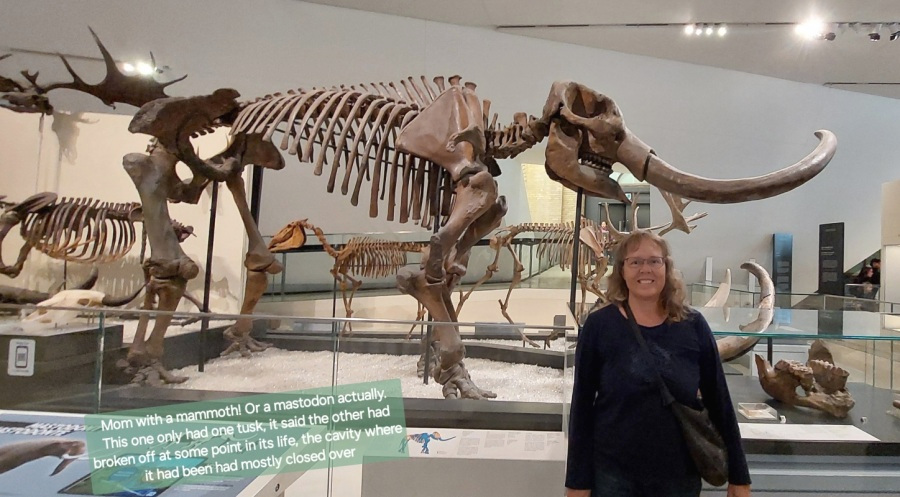 The second reason is, we've been working on the grade 1 new edition, trying to get it all ready. The print version IS ready but the digital is needing a few more touches in the extra files for the other currencies that are supplied with it. (To find the print version, search at Lulu.com or on Amazon for "math mammoth grade 1 2026 edition". Make sure the title and/or description has the "2026 edition" in it.) Yet another reason is, I've been reading several books meant for classroom teachers, trying to find helpful ideas for schools who are using, or thinking of using, the Math Mammoth curriculum. 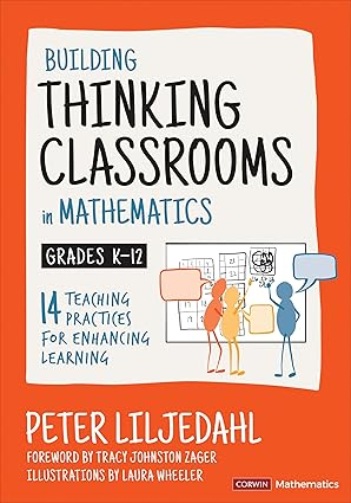 And you might say, "Students already think in math classrooms!" But not so... not according to Liljedahl. The typical thing happening in classrooms (and probably in homeschool classrooms also) is that the teacher talks and teaches, and shows the students how to solve some example problems. Then the students are expected to MIMIC the teacher behavior, and solve other, very similar problems. He's not calling that type of mimicking "thinking". By "thinking", he's referring to actual problem solving... solving math problems that require more than copying the teacher's thinking. Some examples of factors that he found INCREASE student thinking are:
Click the image below to see a short (less than 2 minutes) video showing students working on a task in a thinking classroom: 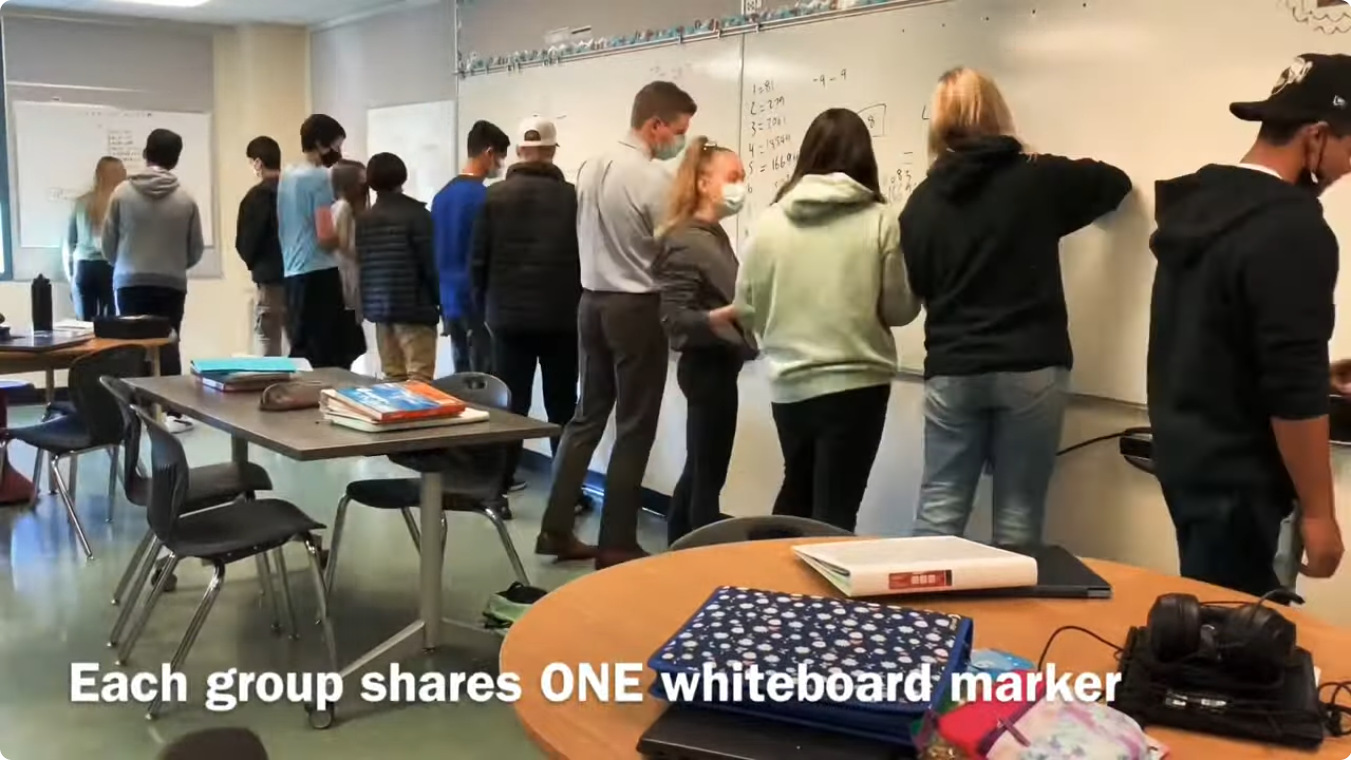 This is just the beginning of what he found by his extensive research and experimentation with 100s of teachers. They found a way to make homework meaningful (not called "homework", but "test-your-understanding questions"). They found ways to ASSESS the types of learning that happen in "thinking classrooms", ways to get students to be more interested and responsible for their own learning, and much more. And it's a complete guide to implement such classrooms. So, I definitely recommend the book. Even if you're just a homeschool teacher, it's bound to give you some ideas, and a better understanding of what true math learning really is. I can just hear some people (school teachers/administators etc.) thinking, "Are you saying you want us to follow the methods in that book, if we use the Math Mammoth curriculum?" Not necessarily. Creating a thinking classroom, exactly as detailed in the book, requires several big changes, and big changes require that you first study the methods in detail, become comfortable with those changes, and that you hopefully have plenty of support. BUT I do feel that schools that use Math Mammoth could easily use part of class time to have students solve some particular word problem in small groups, and then gather together to reflect on the different ways they solved it. In other words, you could occasionally use some of the (or the entire) class time for problem solving in the spirit of "thinking classrooms". If there's anyone of you who is already using this method, or has used it, let me know! I am curious to hear your thoughts. I intend to be back soon, in May, with a regular newsletter! Maria |
| Complete curriculum | Math games and interactive practice | Math Mammoth freebies | New to MM? Start here |
| Privacy & your personal data | Gold at the End of the Rainbow | Blue Series: For filling in gaps |